
Multistate employers once only had to worry about complying with state laws. Today, multistate labor law compliance requirements can include new city-level compliance laws. With multiple new potential jurisdictions to adhere to comes multiple compliance risks for multistate employers. As states continue to allow cities to legislate above them, what does this mean for HR directors, employers and other key decision-makers?
It means that an employee moving from elsewhere in Washington to Seattle involves immediate changes to their wages, scheduling and sick leave. This is one example of many for anyone who manages distributed teams, and it doesn’t just end at an employer’s headquarters. It also includes keeping track of labor laws related to where an employee sits to do their work.
But which states have city-level compliance laws? Let’s identify the leading states that have embraced these laws and what that means for your organization.
In This Article
- Why City-Level Compliance Matters
- California
- Illinois
- New York
- Washington
- Colorado
- Remote Workers and Digital Compliance
Why City-Level Compliance Matters
Some states forbid cities from making their own labor laws. These are known as preemption laws. For example, under the Texas Regulatory Consistency Act, Texas bans cities from making local labor laws. Florida, under House Bill 433, also has some similar regulations in place. Many other states actively encourage cities to create their own labor laws. All cities nationwide must adhere to federal laws like the Fair Labor Standards Act (FLSA) regardless of whether the state allows city-level laws.
HR decision-makers need to understand the difference, especially in areas where state laws differ from city-level pay transparency requirements and compliance laws. The three main areas where this occurs most often are in the minimum wage, paid sick and safe leave, and fair workweek and predictive scheduling laws. Given city-level and multistate labor law compliance requirements tied to an employee’s physical location, including home offices, this information is vital.
California
Minimum wage inevitably fluctuates across states and cities within the U.S. But California has significant local divisions, with more fragmentation than any other state. California’s minimum wage is $16.90 per hour for all employers, with higher minimum wages of $20.00 per hour for fast food and healthcare facility employees.
The local minimum wages across the cities within the state vary. Many of them are significantly higher than the state wage, not limited to, but including:
- Los Angeles: $17.81 per hour, rising to $18.47 an hour in July 2026
- Sunnyvale: $19.50 per hour
- Belmont: $18.95 per hour
- Berkeley: $19.18 per hour
- San Francisco: $19.18 per hour
- Emeryville: $19.90 per hour
- Mountain View: $19.70 per hour
- West Hollywood: $20.22 per hour for hotel workers and $20.25 per hour for non-hotel workers
The complex nature of employment in California means that in cities like West Hollywood or Emeryville, being on the wrong side of the street can result in a different minimum wage requirement.
Paid Sick Leave
Paid sick leave laws by city and state can be complex. California’s Paid Sick Leave (PSL) gives employees paid time off for treatment, preventive care or diagnosis for themselves, family members and other designated persons. While there are some exclusions, employers must provide at least five days off per year for full-time, part-time and temporary workers.
Some cities have distinct ordinances. Under San Francisco’s Paid Sick Leave Ordinance (PSLO) and Oakland’s paid sick leave rules, employers must provide one hour of paid sick leave for every 30 hours worked, including for temporary and part-time employees.
Fair Workweek
Local fair workweek and predictive scheduling laws in areas like Los Angeles are similar to those in other cities, generally requiring the 14-day advanced notice of work schedules, additional pay for changes and the right to rest provisions. LA’s Fair Workweek Ordinance (FWWO) and San Francisco’s Formula Retail Employee Rights Ordinance (FRERO) are good examples of fair workweek rules for large retail employers and staff requirements.
Long Beach, West Hollywood, Santa Monica and Los Angeles also adhere to Hotel Worker Ordinances, which include rules on training, personal security devices and premium pay for workloads exceeding set limits.
Illinois
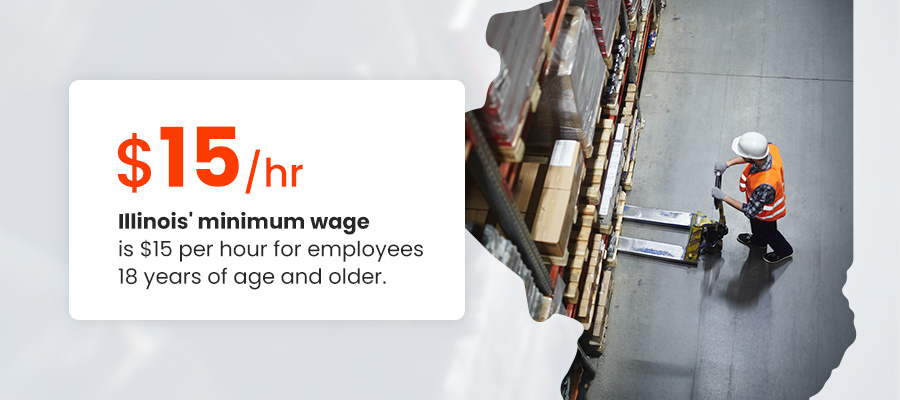
The minimum wage requirements in Chicago and Cook County either match or exceed the state’s minimum wage. Illinois’ minimum wage is $15.00 per hour for employees 18 years of age and older. However, an employer may pay 60% of the minimum wage in certain industries where employees receive gratuities.
Cook County’s minimum wage is also $15.00 per hour and $9.00 for tipped employees. This set wage applies to any employee who has worked for an employer in Cook County for at least two hours in any two-week period. In Chicago, employers with four or more employees must pay a minimum wage of $16.60 per hour. Tipped workers receive $12.62 per hour, but the law requires employers to make up the difference if tips don’t equal minimum wage.
Paid Sick Leave and Fair Workweek
Paid leave, fair workweek and predictive scheduling laws differ in Chicago:
- Illinois paid leave: The Illinois Paid Leave for All Workers Act (PLAWA) gives workers the right to earn up to 40 hours of paid leave a year, accruing at one hour of leave for every 40 hours worked. Employees can take this leave for any reason. Some workers aren’t subject to this law, including independent contractors and certain railroad, airline and education employees.
- Chicago paid leave: Chicago’s Paid Leave and Paid Sick and Safe Leave ordinance is more extensive. It provides more generous benefits to employees who work at least 80 hours within the city over a 120-day period, separating paid leave and paid sick leave. It allows for paid leave of up to 40 hours per year, accruing at one hour for every 40 hours worked, and paid sick leave of up to 40 hours per year, accruing at one hour for every 35 hours worked.
- Fair workweek: Chicago’s Fair Workweek ordinance has specific regulations in the city. It covers employees in particular sectors, including building services, healthcare, hotels, manufacturing, restaurants, retail and warehouses. It gives employees the right to decline unscheduled hours or work hours set less than 10 hours after a previous shift and entitles employees to compensation for schedule changes within 14 days of a shift.
Employers must post notice of this information in a conspicuous place at every workplace facility in Chicago. If applicable, they must also provide fair workweek information.
New York
New York state, under Section 201 of the NY Labor Law, requires employers to provide digital versions of all of their mandatory workplace postings. This applies to employers with or without remote workers. This digital labor law requirement also applies to New York City.
However, the differences between New York state and city laws can pose significant compliance risks for multistate employers. Without a clear understanding, employers can face considerable noncompliance issues. The key differences between the state and New York City employment laws are below.
Minimum Wage
Minimum wage tiers in New York vary by location. The areas with the highest minimum wage tiers are New York City, Westchester County and Long Island, with the minimum wage increasing to $17.00 per hour in January 2026. For the rest of New York state, the minimum wage increased to $16.00 per hour.
Tipped employees may experience a difference in this hourly amount, depending on their region and the specific industry they work in. City-level pay transparency requirements also require NYC employers to include a good-faith pay range in all job advertisements for positions performed in the city.
Paid Sick Leave
Under New York state’s paid sick leave legislation, employers must provide sick leave. If the company’s net income is over $1 million or it has five or more employees, sick leave must be paid. Companies with a lower net income or fewer employees can provide unpaid sick leave.
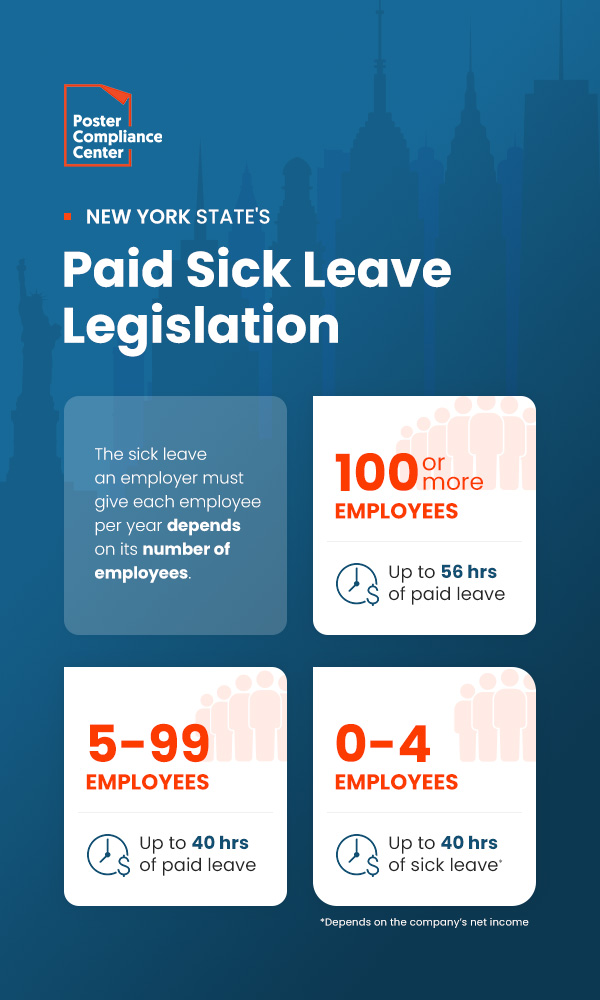
The amount of sick leave an employer is required to provide depends on how many employees it has. Here’s a breakdown of how many hours of paid sick leave an employer has to give each employee per calendar year:
- 100 or more employees: Employers must provide up to 56 hours of paid leave.
- Between 5 and 99 employees: Employers must provide up to 40 hours of paid leave.
- Between 0 and 4 employees: Employers must provide up to 40 hours of sick leave. Whether this is paid or unpaid depends on the company’s net income.
New York City expands on this legislation with the Earned Safe and Sick Time Act (ESSTA). This act includes coverage for an additional 32 hours of unpaid sick and safe time per year and 20 hours of paid paternal leave. The city also broadens the reasons for using safe time, including matters related to:
- Workplace violence
- Domestic violence
- Human trafficking
- Stalking
- Legal attendance for housing
- Subsistence benefits
The New York City Department of Consumer and Worker Protection (DCWP) publishes a notice on this information. Employers must display this notice somewhere visible and accessible in English or in any language that’s the primary language of at least 5% of the workforce. Employers must also clearly report the accrued and used protected time off to their employees on pay statements.
Fair Workweek
There’s no state fair workweek law in New York, but there are local regulations, particularly in New York City. The DCWP enforces NYC’s Fair Workweek Law. The law covers retail, utility safety and fast-food employers in NYC and dictates that employers must give workers predictable schedules.
Additional laws exist for fast-food employers that prohibit back-to-back shift work, sometimes called “clopening” shifts. Employers must provide at least 11 hours between shifts, unless a worker consents to a shorter rest period, for which they must receive a $100 premium. These rules may also apply to some retail employers.
Washington
Washington state has its own labor laws and standards, and several local jurisdictions have their own labor laws and local minimum wage rates. Organizations need to understand these differences.
- Minimum wage: Washington has some of the highest minimum wages in the nation. However, the specific amount depends on an employee’s vocation and location. Seattle’s minimum wage is $21.30 per hour, while SeaTac’s is $20.74 per hour for businesses that employ people in the transportation or hospitality industries. Tukwila’s minimum wage is $21.65 per hour for employers with at least 15 employees globally, but other employers also fall under this criterion.
- Paid sick leave: Employers in Washington are required to provide sick leave. Employees should expect to accrue one hour of sick leave for every 40 hours worked. While all cities follow these state laws, some also expand on them in some areas. Seattle also follows these rules, with a few additional paid sick and safe time labor standards.
- Fair workweek: Seattle’s Secure Scheduling Ordinance covers hourly retail and food service chains with over 500 employees. Employers must provide an estimate of the median number of hours employees will work and post work schedules at least 14 days in advance. It also explains rules on offering additional work to current employees and time-and-a-half pay for hours worked between shifts separated by less than 10 hours.
This ordinance also requires employers to display a workplace poster in a clear, visible and accessible place. The poster must be in English and also include the primary languages of other employees.
Colorado
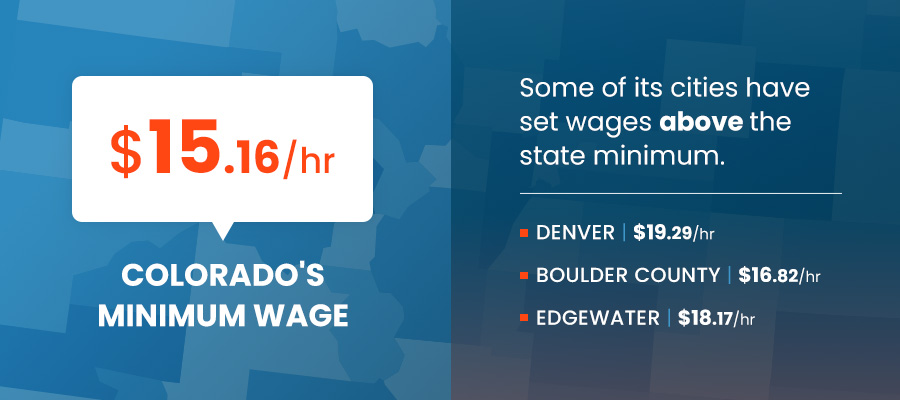
Colorado’s minimum wage is $15.16 per hour, while some of its cities have set wages above this state minimum. Denver’s minimum wage is $19.29 per hour, while Boulder County’s minimum wage is $16.82 per hour. Edgewater’s minimum wage is $18.17 per hour, or $13.50 per hour for tipped workers.
Denver is especially unique, as it has the Civil Wage Theft Ordinance, which audits and enforces payment of wages employees are legally entitled to. Where local laws differ from state laws, employers may be required to post city-specific labor law posters in addition to Colorado state posters.
Other Notable Jurisdictions
Other cities in other states have differences in sick leave and minimum wage laws that employers need to be aware of:
- Minnesota: Minneapolis has a minimum wage of $16.37 and its own Sick and Safe Time laws. Saint Paul’s wage is currently $16.37, with more changes coming in July 2026.
- Maine: The minimum wages in the city of Portland and the city of Rockland differ from the state’s minimum wage, and there are other differences in hazard pay for employees in Portland.
- Maryland: Montgomery County’s minimum wages are typically higher than the state minimums.
- Arizona: Flagstaff’s minimum wage is higher than the state minimum.
While these local minimum wage laws by city are 2025- and 2026-based, it’s a good rule of thumb to expect future changes to remain prepared in digital compliance.
Remote Workers and Digital Compliance
Modern workplace cultures create convenience for employees and compliance risks for multistate employers. An employee working for a Texas-based company who lives in West Hollywood means the Texas organization must comply with the labor laws of the state and city where the employee resides.
Remote employees are legally entitled to have clear access to city-specific labor law posters. Organizations with distributed teams can manage city-specific requirements seamlessly with eComply360, which includes federal and city posters, easy access to labor law notices and a compliance warranty.
Having this in place helps reduce the financial impact of noncompliance and class-action lawsuits stemming from confusion over fair workweek and overtime practices.
Streamlined State and City-Specific Labor Law Posters
Knowing which states have city-level compliance laws is just the beginning. True compliance requires constant city-level visibility and a streamlined process to remain compliant digitally and beyond. With labor law poster requirements to meet, monitoring hundreds of municipal changes isn’t feasible alone.
Partnering with Poster Compliance Center ensures that your HR team doesn’t get caught off guard. We update posters and digital files as soon as a city updates a law. With plans covering multistate labor law compliance requirements, including city, state and federal changes, we provide true compliance without the stress. Ready to secure your locations? Get a quote and begin your compliance audit.